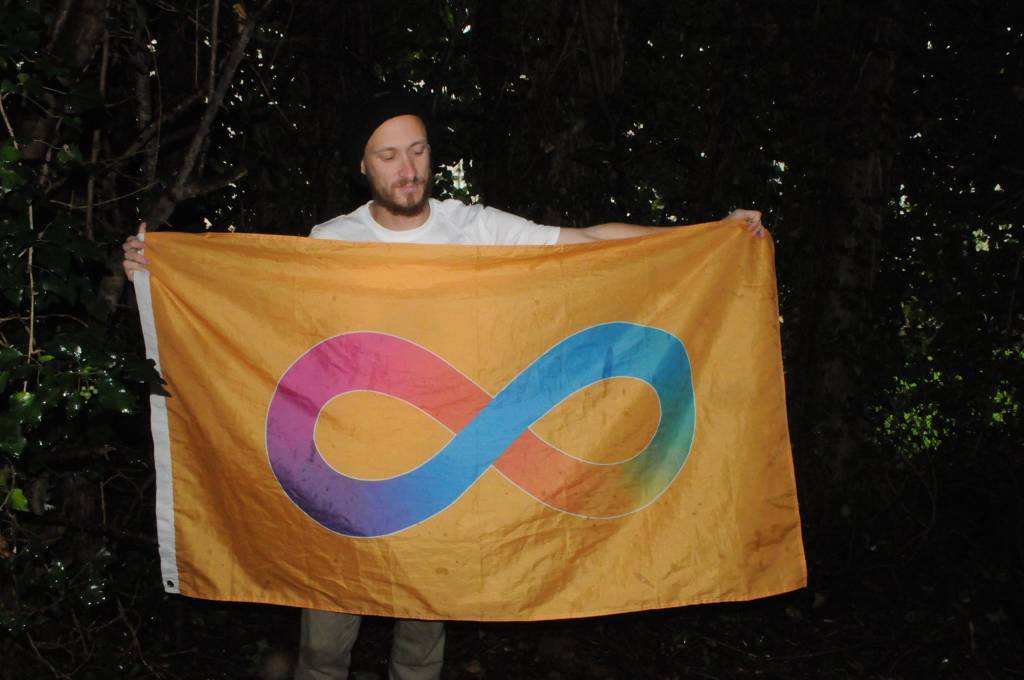
Autistic people are changing the world. We’re shifting narratives away from the medicalist, deficit model to the neurodiversity paradigm, which highlights both our strengths and challenges. But we’re also going deeper, questioning harmful social hierarchies and oppressive systems.
In this new series, I speak with the neurodivergent creatives, writers, artists, activists, visionaries, and researchers who are shaping views of neurodiversity and improving the quality of neurodivergent lives.
Growing up in rural Lincolnshire, I didn’t always meet a lot of people like myself, or see many neurodivergent people speaking up and being heard locally. That’s one reason why I wanted to speak with Callum Brazzo, a key figure in Lincolnshire’s autistic community.
Callum ran his popular column Autistic Lincs in the Lincolnshire Free Press between 2018 and 2022, before it moved onto Facebook. His advocacy has helped to raise up local autistic voices, including my own, highlighting the importance of both in-person and online collaboration within our community.
Q. So, who are you, and what’s your role in the online autistic community?
A. My name is Callum Brazzo and I am an autistic OCDer with Tourette’s, based in Spalding. I do lots of things, but perhaps to summarise, I am a performance poet, have been recognised as a TEDx Speaker, founder of clothing brand Aut Couture, facilitator of 18+ autistic adult peer support group Autistic Led, and most pertinent to this conversation, writer of former Lincolnshire Free Press column and now online presence, Autistic Lincs.
I don’t know about my role in the community, aside from the social responsibility I bear as a poet. Poetry and writing has been so crucial to my wellbeing that, now I am in the headspace of going out and sharing my story, I want to be as authentic as I can. I hope I am doing okay!
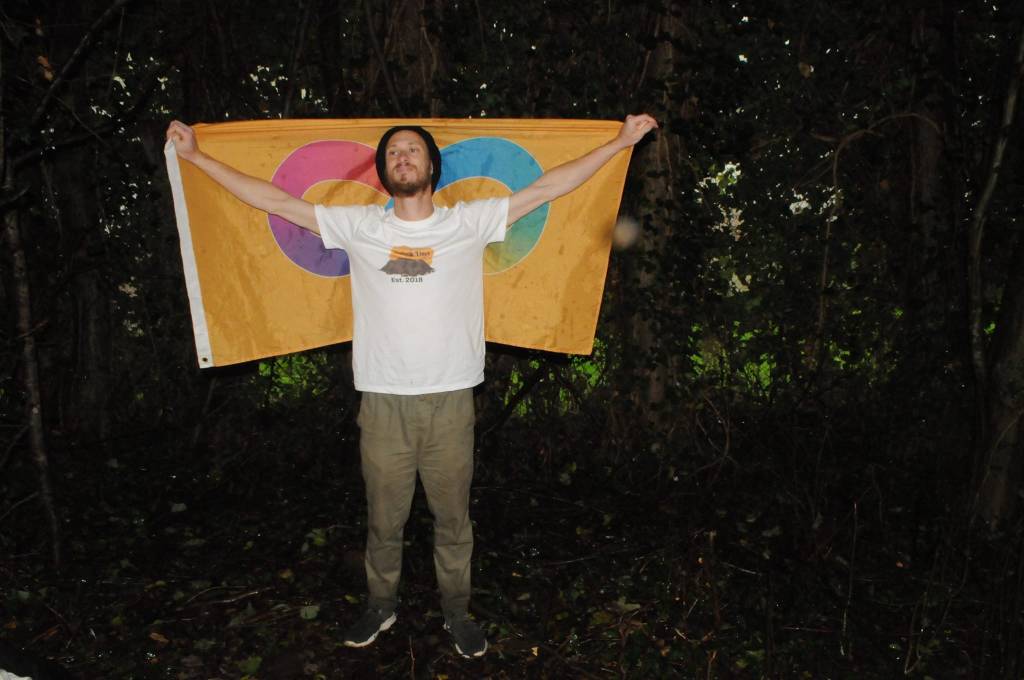
Through the online presence, I share information, host live chats, offer opportunities for collaborations, advertise the website and other businesses and initiatives, but I am hoping to get back into the world with public events soon too.
Q. Can you tell me a bit about your experiences as an autistic person in Lincolnshire?
I will do my best to condense things here!
At Primary School, everyone seemed to care more about my lack of traditional social activity than I did, content in the playground corner pretending my fingers were wrestling.
At Secondary School, I noticed a mental shift, a disconnect and struggle.
My parents divorced during this time (unrelated to me, but a story running parallel to mine); I was bullied, had a bout of truancy in the toilets or general area, silently disregarded by teachers who would send me to the SEN unit or Isolation. All this time, encouraged by my parents’ divorce initially, I had poetry as my escape, my biggest communication tool.
Eventually, I would get taxied to alternative provision at Boston College to get GCSE equivalents. I did my best there and went on to have a fleeting time at the Sam Newsom Centre studying music, of which I only managed one year out of two (the 2nd year would have been more focused on performing, ironically!).
The Prince’s Trust Team Programme in King’s Lynn, a media course at the College of West Anglia and three years of a Supporting, Teaching and Learning in Schools course placement all molded me into the amalgamation of experiences I am today.
The course had me at Gosberton House, then at the (then-named) John Fielding Special School. Both were awesome learning opportunities, but I really got the bug at John Fielding when the individuals were of fairly similar age to me.
I didn’t have local autistic people come into my school to chat with, no groups in my community ecosystem, so this felt like the first memory of something akin to those things, but of course, confidentiality is key and boundaries were kept.
I think this highlights the double-edged sword of advocacy within certain situations, especially when you are young and trying to build something that truly did not exist or was not made clear on your social radar.
Now, I believe that neurokinship is the metaphorical glue binding us together though on our separate, but simultaneously collective journeys.
Q. Do you feel neurokinship is particularly important for autistic people?
Essential. The world is oppressive enough for us.
Now, does it mean that we will all automatically get on? No.
Sensory and social dynamics vary tremendously, but there is still a neurokinship to be gained and, hopefully, nurtured through acknowledging the nuances of support needs, whilst also celebrating each other’s brains in a way that I do not think many neurotypical people would.
Q. What inspired you to start up the Autistic Lincs column, and now the website and Facebook page?
Honestly, the lack of representation. A longer story short, but I knew a gentleman called Winston through an arts programme called Youth Takeover at the time and reached out. He suggested connecting with then-editor, Jeremy, and once he asked me to send an initial column, he just told me they’re happy to keep it going as long as I can keep it going…
The Facebook page began as another, more immediate, way to connect with the community, starting one year after the column.
However, once the column ended in physical form, it’s been a contact point for expanding the residual presence of the articles through live chats, collaborations, guest columns and more without deadlines (which would fall on Monday morning if my memory serves me, and sometimes I wouldn’t have anything to write about or I’d struggle meeting the deadline with my brain being how it can be).
The Facebook Page and the website required a rebranding of sorts with, ideally, autistic authenticity at its core. So, I worked with Cool Capture Photography on a photoshoot for new images on both platforms.
It was important for me to do that in order to grow, as I’m a principle-driven person and I’m ecstatic that the community’s values empowered its fresh look (as well as the three words I live by within the name of the page – “Empowerment, Collaboration and Community”).
Q. Do you have a special interest you’d like to share?
Parkour and painting! I don’t practice parkour consistently (one time was socially different when I was younger and another was tough long-term financially to sustain) but parkour is truly free, tactile, expressive and keeps me centred, much like dance.
Q. Is there something you really like or feel proud of in terms of being autistic?
My passion and creativity. I certainly wouldn’t be here without poetry.
Q. What do you think is misunderstood the most about autism?
A lot of Autistic experiences are misunderstood, but if I had to pick one element, it might be that people like me who might be seen as ‘high-functioning’ still have ‘support needs,’ and that’s okay.
Q. What is your hope for the future in terms of neurodivergent rights and acceptance?
I think it’s easier than we make it, sometimes. The human experience is full of difference, so I suppose I hope that we can impart more genuine curiosity and compassion towards others whose experiences vary from what we regard ‘the norm,’ which of course doesn’t exist.
Neurodiversity applies to all brains, but there’s a nuance that’s worth noticing. Neurodivergence doesn’t mean a life is less valid or resilient or any kind of pathological, pessimistic viewpoint people may have.
Celebrating neurodiversity (in an accurate way, which people get wrong a lot) more frequently could create social bridges of understanding, rather than these realms of disconnect that currently populate our systems, etc.
Q. What would your message to young neurodivergent people be?
I have a poem called Proof, which you can find a few ways on YouTube, perhaps most notably at the Benjamin Zephaniah festival I was fortunate to be involved with. Although it’s a set of 3 poems, for me, that poem says it all. I remember performing it for students at Boston College, the place things started to change for me, and it was so emotional!
Q. What is your message for the parents and loved ones of neurodivergent people?
If we are bold enough to step outside the traditional lines of life, we can make some amazingly authentic shapes.
The autistic journey is grey; acknowledging the nuance of support needs, whilst empowering the more positive elements of our experience is possible and practical.
Uncovering the root needs (parents fearing how children will cope in the world being non-speaking) is okay, but there are healthier ways to meet the same primary needs (without ABA, PBS, etc).
Hold society more accountable for its rigidity, refusal and outright oppression towards autistic people.
Q. Is there a project you’re currently working on?
Yes, always! Right now, I’m working on a documentary about the experiences and stories of Autistic people in Lincolnshire. Ongoing ‘projects’ if you like, include but are not limited to, Light It Up Gold Lincolnshire, which is a countywide initiative to show solidarity with the autistic community in April 2026 (and beyond, of course!).
Plus, I’ve pretty much finished a little guide I’ve made on Autistic adult peer support groups, centring on suggestions for how to empower our community and environments.
Further links
You can find out more about Callum’s writing and projects on the Autistic Lincs website, or keep up to date with developments on the Autistic Lincs Facebook. The second part of this article, which features Callum’s interview with me, can be found on his website.

 Living AuDHD
Leave a comment